
A Flint Hills Love Story
August 24, 2026
In memory of Nancy Landon Kassebaum
Former Humanities Kansas board member, 1977-1979
From the Fall 2016 Humanities newsletter
The decades-long creation of a national park in the Flint Hills of Kansas is a lesson in how compromise and a common love for the Kansas land can bridge the gap between groups with fundamentally different worldviews.
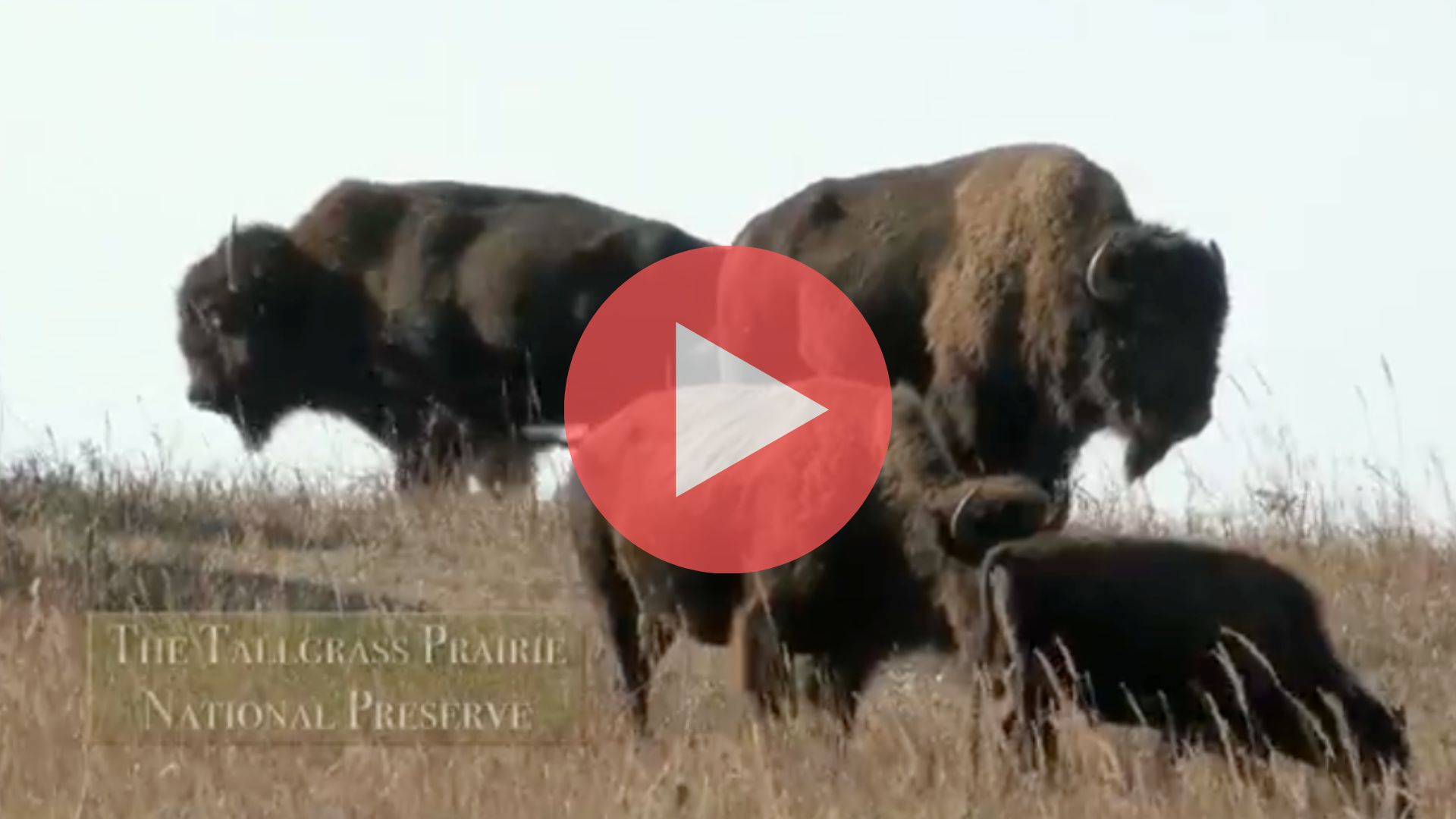
The Tallgrass Prairie National Preserve unfolds over 11,000 acres in Chase County. The preserve is home to virgin prairie – some of the last of its kind in North America. As far back as the 1950s there was talk of creating a national park in the Flint Hills. As the talk grew, so did the number of people who were both for and against the idea of a national park.
On one side was Save the Tallgrass Prairie, a group advocating that a portion of the Flint Hills be set aside for a national park. On the other side was the Kansas Grassroots Association, a group supporting the free use of the grasslands for cattle grazing. Both groups loved the Flint Hills, but had competing visions for the region’s future.
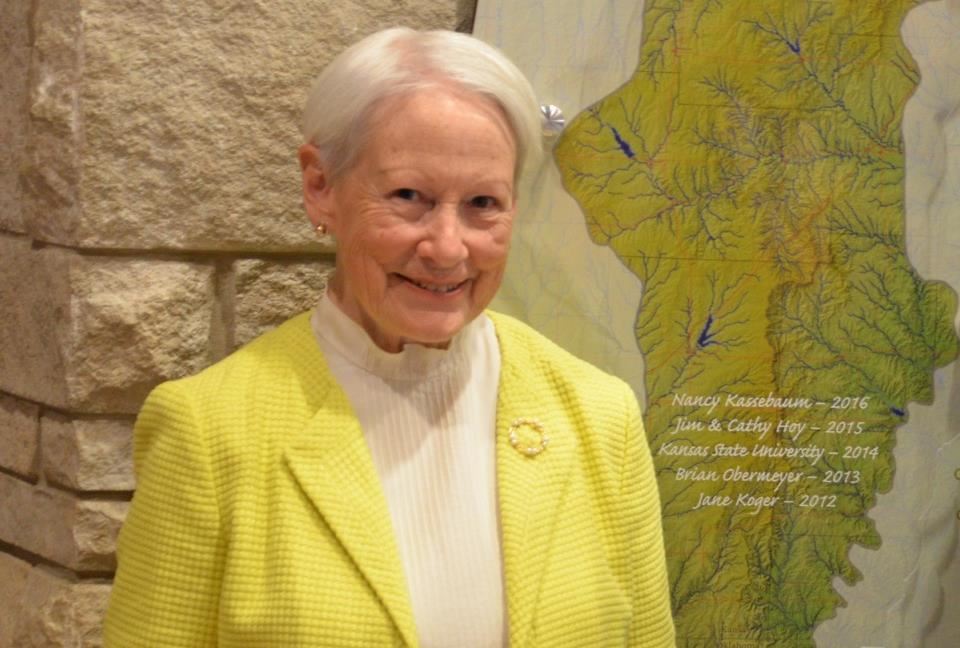
From the 1970s through the 1990s, efforts to create a prairie park remained a contentious issue in Kansas. Then, a turning point came with the involvement of then-Senator Nancy Landon Kassebaum. Senator Kassebaum represented Kansas in the U.S. Senate from 1978 to 1997. She has had ties to the Flint Hills since childhood and resides in the Morris County ranch that she has owned since the 1980s.
In the documentary “Tallgrass Prairie National Preserve: A Flint Hills Love Story,” Senator Kassebaum reflects on the challenges she faced upon entering the discussion about the national park. “It was like the Hatfields and the McCoys,” she recalled. “It was a real clash as this concern grew…How much land would be taken in, what would be the use of it as a park, and who would run it?”
Senator Kassebaum invited the interested parties to the table to seek a resolution. A management plan for the preserve was developed, bringing diverse perspectives into consideration. Among the compromises was that the majority of the park would remain in private ownership and that the National Park Service would never acquire more than 180 acres by donation from the private landowner of the park (at the time of legislation, the private landowner was the National Park Trust, now it is the Nature Conservancy of Kansas). Senator Bob Dole joined Senator Kassebaum to introduce legislation to Congress to create the Tallgrass Prairie National Preserve. The legislation was approved on November 12, 1996. A story that began with conflict over a proposed national park in the Flint Hills found resolution with discussion, engagement, compromise, and collaboration.
Today, the Tallgrass Prairie National Preserve is managed by a unique public and private partnership between the National Park Service and the Nature Conservancy of Kansas. Together, both entities work to preserve the tallgrass prairie and its legacy for future generations of Kansans.