

Hand Talk
September 16, 2025
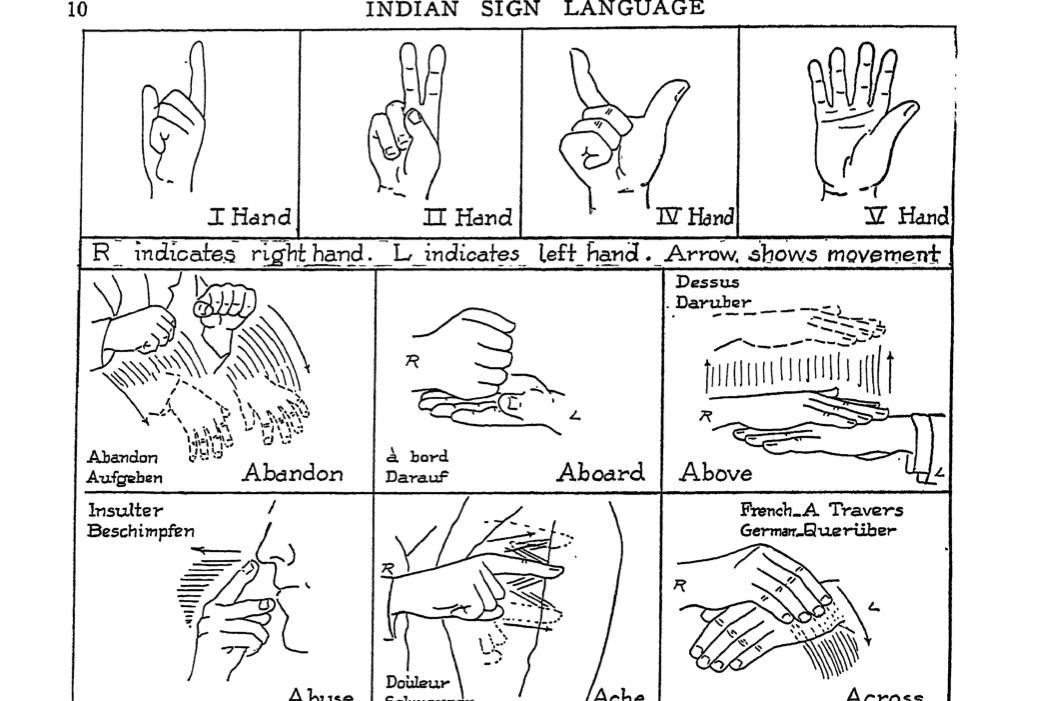
Language has always been a bridge between communities, helping diverse groups find common ground and build connections across differences. Visual language, in particular, holds unique power to strengthen human understanding and bonding. Long before spoken English or Spanish dominated the region, the Plains Indian tribes, of what is now called Kansas, developed a solution rooted in visual communication: Hand Talk. Plains Indian Sign Language (PISL) allowed the Kanza, Osage, Pawnee, and many others to communicate across different spoken languages. Far more than a practical tool, Hand Talk fostered diplomacy, trade, and connection—revealing how visual language and use of gestures requiring eye contact can strengthen human relationships. The Museum of Deaf History, Arts, and Culture in Olathe is exploring the deep history and continuing legacy of this visual tradition in a new exhibition titled Hand Talk, opening on September 17, 2025. The exhibition is part of the Americans statewide initiative uncovering the many ways American Indian images, names, and stories have been part of the nation’s identity since before the country began.
Hand Talk is broadly known as Native American Indian Sign Language (NAISL). Regional dialects, like the one distinct to the Plains nations, also exist. All have been around for centuries and passed down over time. One of the first written accounts by European records indicate that Coronado witnessed Hand Talk during his time in present-day Texas. According to “Signs and Stories of the Wind River,” a project led by Wyoming Humanities and Shoshone elder Willie LeClair that included his use of Hand Talk, “It was observed among Florida tribes by 16th Century Spanish colonizers when Coronado documented in his journals in 1540 that as he met the Comanche peoples in present-day Texas, the Comanches made themselves so well-understood with the use of sign talk that there was almost no need for an interpreter.”
In the book, Universal Indian Sign Language of the Plains Indians of North America by William Tomkins, the author describes the movements of Hand Talk as “inspiring, and a thing of beauty.” He talks about how the beauty of the language is rooted in the gestures “rounded and sweeping,” not “angular or jerky.”
You can watch LeClair speak the language in an interview recorded by Wyoming Humanities.
Watch here
The Hand Talk exhibition at the Museum of Deaf History, Arts, and Culture encourages visitors to experience the significance of Hand Talk. “PISL is crucial for honoring Kansas’s Indigenous heritage and educating future generations,” shared Chriz Dally, executive director. The museum also wants visitors to explore the cognitive and cultural richness of NAISL. “Research shows that learning sign language is a brain superpower and deepens cooperative connectives through enhanced cognitive processing skills,” Dally added. “This initiative underscores the importance of reclaiming, preserving, and using signed languages, reinforcing the crucial role that a visual language provides in enhancing cultural and cognitive significance for all communities.”
In addition to the exhibition, the museum is hosting a Hand Talk Opening Ceremony on October 3. They will welcome Dr. Melanie McKay-Cody, a leading advocate for preserving NAISL and PISL. This presentation is free and open to the public. A voice interpreter will be provided.
“Participating in the Americans initiative is meaningful for Deaf people, Native Americans, and the public because it highlights the vital impact of signed languages,” says Dally.
Hand Talk will be on exhibit through October 18, 2025.
Support for the Americans initiative has been provided by the Blue Cross Blue Shield of Kansas Foundation and the Sunflower Foundation.
Join the Movement of Ideas
- VISIT the Hand Talk exhibition at the Museum of Deaf History, Arts, and Culture in Olathe, September 17-October 18, 2025.
- ATTEND the Hand Talk Opening Ceremony with Dr. Melanie McKay-Cody at the Museum of Deaf History, Arts, and Culture on October 3, 2025.
- SEE the Americans Smithsonian traveling exhibition at the Watkins Museum of History in Lawrence, along with the local exhibition “A Question of Representation” created by the Haskell Cultural Center and Museum, through October 5, 2025.
- LEARN more about Wyoming Humanities’ PISL project.
- READ about Hand Talk as depicted in the work of artist Charles Russell in this article by the Sid Richardson museum featuring Dr. McKay-Cody.